Mon - Fri 8:30am - 7pm | Sat - Sun 9am - 5pm
Call local rate

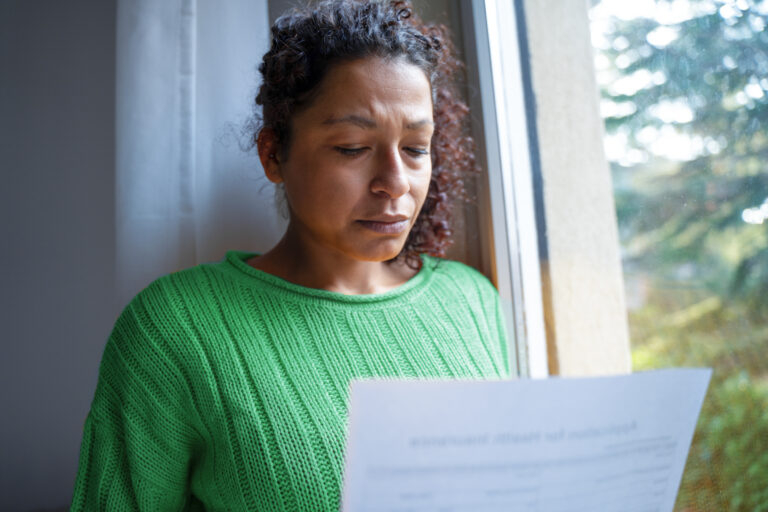
Applying for a divorce can take minutes, but getting to the stage where you know divorce is right for your marriage could take months or years longer. It’s important to note you must have been married for at least 12 months to get a divorce.
To start the divorce process, you need to submit an application to the family court (Form D8) with a declaration that your marriage has broken down irretrievably. You do not have to provide any other reason other than this, nor do you have to be separated for a specific period before you can apply for a divorce.
The application is usually made online via a court portal (although you can make a paper application). Either method requires an initial divorce cost of £612 (previously £593, usually paid by the applicant).
You can apply for a divorce by yourself (sole applicant) or make a joint application with your ex-spouse (joint applicants). In the case of a joint application, one of you will need to be the ‘applicant’ and the other the ‘respondent’.
Alternatively, if you receive a divorce application from your spouse, you are called the respondent in the legal process.
Once the divorce has been applied for, the respondent is sent the divorce application and the Acknowledgement of Service, which is a document declaring that the application has been received and that the respondent agrees to the divorce. The respondent has 14 days to return the completed Acknowledgement of Service to the court.
This part of the process may take longer if the respondent has not received a draft copy of the divorce application or does not respond at all.
It is possible to dispute proceedings, but the reasons for doing so are limited and generally have to do with the validity of the marriage and whether it was celebrated according to the correct procedure. Of course, this means your spouse can drag out divorce proceedings, but it is unlikely that a refusal to acknowledge the divorce will be accepted.

The conditional order is a certificate that says the court does not see any reason you should not divorce.
The conditional order is granted by your local family court when:
As long as the paperwork is completed correctly and the court is satisfied that the marriage has irretrievably broken down, both parties will receive a letter called the ‘Certificate of Entitlement’ confirming the date that the conditional order will be granted.
The date of your conditional order being granted will be after the 20-week cooling off period, in which time you should ideally negotiate your finances and any children matters.
Six weeks and one day after the granting of a conditional order, you can apply for a final order of divorce.
This is the last stage of divorce and legally ends your marriage or civil partnership. This means there are significant implications of the final order and you should make sure that your financial settlements are finalised before you apply for one.
How long it takes to get a final order depends on how long it takes for you to reach a financial settlement. Importantly, however, if you do not apply for a final order within 12 months of getting the conditional order, you will have to explain the delay to the court. It might be that your financial or children arrangements take longer than expected but the court needs to know that you still intend to progress with the divorce.
You should keep your final order once you have received it as you may require it if you remarry or change your name, e.g. back to your maiden name.
If more than 12 months have elapsed between obtaining your conditional order and applying for your final order, you will have to submit a short statement to support your application, explaining the delay.

It can take between 6 and 12 months to sort out divorce finances. However, the length of time will often be comparable to how complex your assets are. For example if you have international assets, multiple properties or shares, it can take longer to reach a financial settlement.
An expert family lawyer will draw up the financial agreement you and your ex-spouse make, setting out the financial arrangements and any further financial commitments.
This agreement should then be made legally binding through applying to the family court for a financial consent order.
This will mean that you and your spouse’s finances become separate, and neither person can make a claim against the other in the future.

If you are a parent, you will need to consider the options for child arrangements going forwards. Our specialist children solicitors advise clients on making these arrangements, and ensuring the wellbeing of the child/ren is prioritised, and helping parents navigate any contested issues.
In cases involving children, court action should be used as a last resort, and the welfare of the children will remain the paramount consideration.
Child Arrangement Orders, which have replaced Child Contact, Child Custody Orders and Residence Orders, are legal agreements setting out where a child should live (residence), who they should spend time with (contact) and who the children are allowed to see during the contact.

The quickest way to finalise your divorce is to, where possible, avoid court. Disagreements can be resolved through a number of non-court dispute resolution methods such as mediation, collaborative divorce, negotiation through solicitors or private financial dispute resolution.
Where these will not be appropriate is in cases involving domestic abuse.
Professional mediators or collaborative lawyers can work with you and your ex-spouse to navigate your disagreements and obstacles without tensions escalating. Mediation and other NCDR methods are a cheaper and more time efficient option than court.

Gemma Davison, Head of our Oxford law office and trained mediator and collaborative lawyer, says:
“Mediation is a great way of having those difficult conversations in a constructive environment. Having an unbiased party present to help guide your discussions means emotional reactions can be minimised and both you and your ex can focus on the important matters at hand.
There are several different variations of mediation which mean that most couples can find a suitable option. Child-inclusive mediation is good for parents, as it allows the children to share their wishes and feelings in a safe space.”
Many of our lawyers are members of, and accredited by, Resolution, an organisation bringing together family law professionals who support clients through the divorce process to keep matters amicable. Our family lawyers are focused on building a solid foundation for you to move forward, rather than getting caught up in acrimonious disputes.
Prenuptial contracts or postnuptial agreements set out your arrangements for finances in the event of a divorce or separation. If you already have one, this can speed up the divorce process as all matters have been decided on beforehand. However, they are not legally binding and if a judge deems the terms of the agreement to be unfair then it will not be upheld.
It is also important to note that you cannot get a nuptial agreement if you are anticipating a breakdown in your relationship or have had discussions with your spouse about ending your marriage.
Here are some useful tips to help make the divorce quicker.

Sign up for advice on divorce and relationships from our lawyers, divorce coaches and relationship experts.
Privacy Policy Close newsletter modal